Why Mandatory Property Disclosures Matter — An East Rand Property Expert’s Perspective
In residential property transactions, trust and transparency are essential. Over the years, I’ve seen how mandatory property disclosures play a critical role in protecting both buyers and sellers and ensuring smoother, more secure sales.
Buying or selling a home is a major financial and emotional decision. Proper disclosure helps set clear expectations and reduces the risk of disputes later on.
What Are Mandatory Property Disclosures?
In South Africa, sellers are required to complete a Seller Disclosure Form, declaring any known defects or issues relating to the property. This form forms part of the Offer to Purchase and is a key component of the sales process.
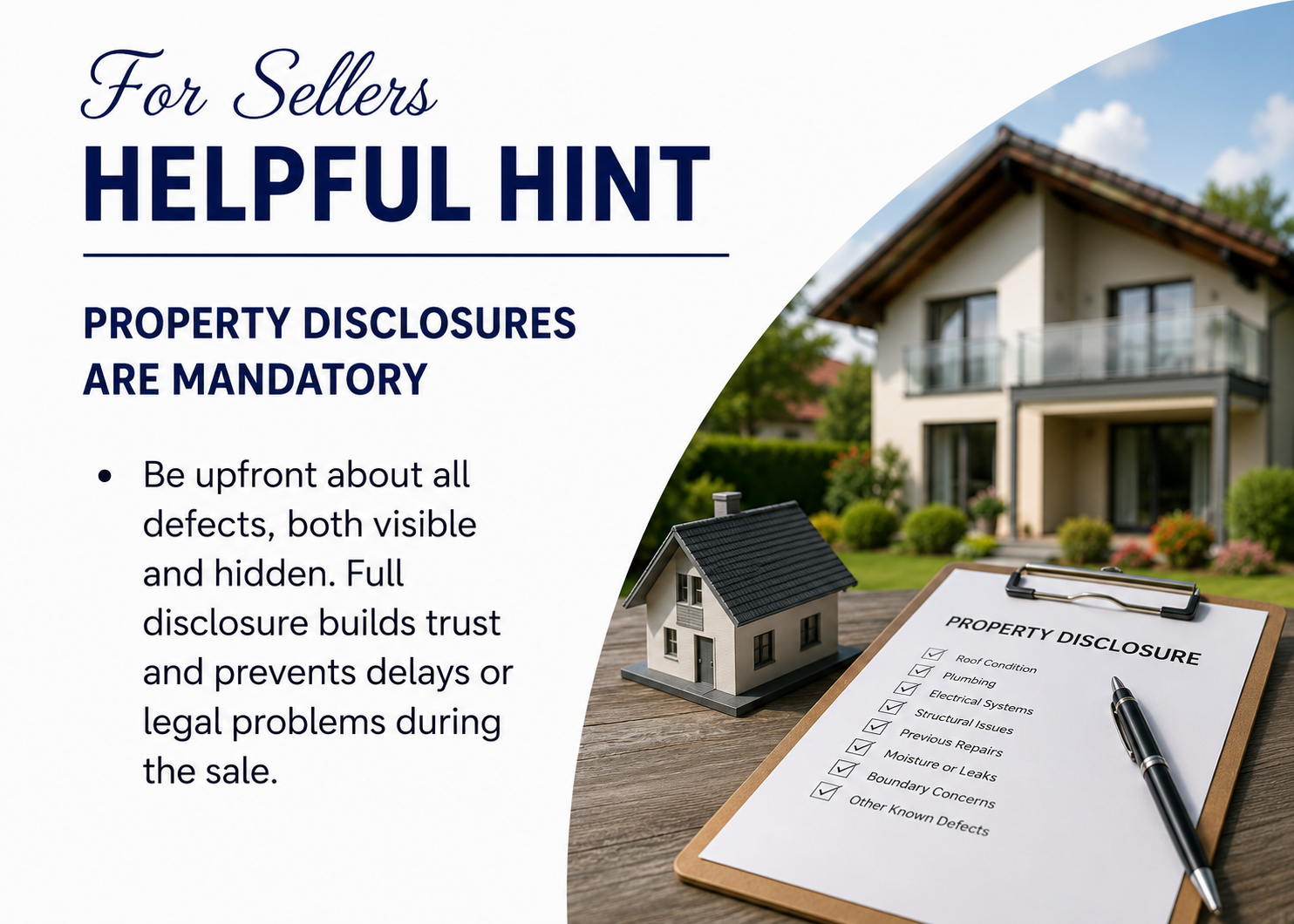
Disclosures typically include:
Structural issues such as cracks, damp, or roof problems
Electrical and plumbing defects
Compliance matters (electrical, gas, beetle certificates, building plans)
Boundary or encroachment issues
The goal is not to present a perfect property, but to provide honest and accurate information.
Why Disclosures Are Important for Buyers
For buyers, mandatory disclosures provide clarity and peace of mind. Knowing the true condition of a property allows buyers to make informed decisions, budget realistically for repairs, and avoid unpleasant surprises after occupation.
Why Disclosures Protect Sellers
Many sellers worry that disclosure may negatively affect their sale, but transparency often works in their favour. Honest disclosure builds trust, supports fair negotiations, and significantly reduces the risk of legal disputes after transfer.
Failing to disclose known defects can have serious legal and financial consequences long after the sale has been finalised.
Transparency Leads to Better Transactions
When disclosure is handled correctly from the outset, property transactions tend to be faster, smoother, and far less stressful. Transparency builds trust and creates outcomes that are fair for both buyers and sellers.
In property, honesty isn’t just good ethics — it’s good business.